Home

Showing posts with label A book worth talking about.... Show all posts

Sunday, January 5, 2014

A book worth talking about - The Luminaries


The Luminaries 


by Eleanor Catton


Winner of the 2013 Booker prize, this book was rated highly in the press.....I wonder how many of the press read it to the end? It's no more than a fairly bog standard, well executed Victorian crime story set in New Zealand. It could have been cut by a third. The pace is excruciatingly slow, being mainly dialogue; Dickensian in manner but without the Dickensian humour and characterization. It is a slight story evolving slowly with much repetition as the many characters, none of whom are drawn well enough to elicit my sympathy, empathy or even protracted interest, put their differing points of view. Was I 'bovvered' about them? Not very much.

Although Catton deserves praise for her research, this was, at times, a bit overt and the astronomical references were a mystery to me as I found them totally irrelevant. Perhaps I missed something? I did notice the shortening of later chapters (phases of the moon?) as threads were rapidly drawn together. But the effect of this structural device just served to convince me that Catton had begun to panic at the sheer size of the monster she'd created and felt the need to sprint her characters towards what turned out to be an unsatisfying and predictable conclusion.

I'm from New Zealand so had high hopes that this novel might do much for the image of New Zealand literature abroad. Like the long haul flight to get here, this book requires stamina to go the distance and reach the end, not least because its size makes it difficult to read in bed!

A book worth talking about - Wine Dogs New Zealand


Wine producers in New Zealand take their wines seriously. They don't, however, take themselves too seriously. In this book of photographs, compiled by award winning NZ photographer Kevin Judd, we meet dogs of all shape, size and age who are lucky enough to live on a vineyard (or winery as they're known here) in God's Own Country.


Accompanying each portrait, is an irreverent CV detailing individual attributes:  naughtiest deed (stealing bungs from full barrels); most unsociable behaviour (passing wind under the tables at an important tasting); and most  frequent partner in crime (biggest doggy buddy who often lives across at the neighbouring winery.) There's a lot of chook chasing and stealing of the workers' lunches going on, not to mention the rivalry for status between the winery dogs and the incumbent cats.

You don't have to be a wine lover to enjoy this small book. You just have to enjoy looking at stunning and painstakingly collected photographs of cheeky, lovable dogs who clearly take the stuffiness out of what is sometimes seen as an elite world. And if you do like to travel the wine trails you won't be up to much reading if you're tasting as you go, so this is an ideal book to take with you as there's not much reading in it. Just lots of pictures and tall tales that will make you want so seek out particular labels because of their dogs as well as their wines.

PS: And if you prefer Australian wines, well, they do a similar book that covers the Aussie wine producers...(who are not a patch on the Kiwis but their dogs are pretty cool).


[WINE DOGS The Dogs of New Zealand Wineries by McGill, Elliott & Judd]

Monday, January 17, 2011

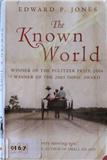
A book worth talking about... The Known World

The Known World, a first novel by Edward P. Jones, won the 2004 Pulitzer Prize and the 2005 IMPAC Award. It joins a long list of novels about slavery, the slave trade and life on the plantations of the southern states of America. The Known World differs from others in this genre, however, in that the slave owners are black and former slaves themselves.

At the start of the novel the reader is introduced to a great many characters in a few pages. You wonder how you will keep up. Especially as these characters confront you with their price tag intact. By stealth, Jones attempts to persuade you to view humans as property... legacy... a commodity that is insurable against accident but not really against age and wear and tear. Where lash marks on a man's back may reduce his potential price by $5 a scar, necessitating other, less visible forms of punishment. You find yourself doing the sums. You can visualize the accounts book. Give a bit here, take a bit there. If that involves splitting up a lifetime partnership, well so be it. Marriages can be inconvenient. The books must balance.

This book is not an easy read, but well worth the effort. Using multiple narrators, many tales are told by different people, so very different points of view are juxtaposed. Time is fluid and, in the manner of oral story-telling, moves back and forth. The reader needs to work a little.

The most startling revelation, that a black slave owner can end up owning his own parents and siblings, shifts the familial dynamics in ways that surprise and shock. Black slave owners inhabit two worlds. To be taken seriously as businessmen and women, they must be seen to be working within established systems. The Abolitionists are making progress, yet the move towards freedom is fraught with moral, social and political complexities. For the slaves, their known world can feel safer than the new one on the horizon.

The Known World is a novel that creeps up on you. You feel inhabited by something sinister and unpalatable, but also unputdownable.

Saturday, January 8, 2011

A book worth talking about... Camping on the Faultline

Camping on the Faultline, a memoir by Marilyn Duckworth, is worth talking about primarily because of its resemblance to the celebrity gossip magazines we wouldn't be seen reading in public. I thought I might get an insight into the writing life of a well known and much lauded NZ author. Well, I suppose I did, of sorts.

A restless spirit, Duckworth claims she writes her best when she's away from home. That said, flitting between two countries, forty-nine houses, twelve schools, four husbands and many lovers, clearly contributed to her considerable writing output. This book, however, let me down. All I learnt was who, of the NZ literati, was in bed with whom throughout the flirtatious 50s, through the sexy 60s to the naughty 90s. They were all at it and Ms Duckworth holds nothing back.  They're all in there. All the writers we think of as being the core of the NZ literary scene of that period. I'm not going to drop names, but, Maurice Shadbolt is in there...  and Fleur Adcock running off to wed Barry Crump? Of course most of this was pre The Pill days and so inevitably multiple children ensued from the couplings of various combinations of spouses, lovers, mistresses and what have you. Too old to be considered hippies, they'd missed Bohemia by miles. So what drove them to leap from bed to bed, relationship to relationship? The word 'creativity' is tossed around and although there are references to several of Duckworth's books, there's no real insight into the creative process and nothing that significantly links the events of her hectic love life to that of her writing life. To be honest, I felt exhausted for her and not at all surprised that she needed to upsticks and leave, yet again, in order to concentrate on writing. Haven't we all felt that urge? However, after husband number four, I lost interest in these people. Ms Duckworth doesn't regret any of it, she says. And clearly, it worked for her.

Wednesday, December 15, 2010

A book worth talking about.... The Spare Room

The Spare Room, by Helen Garner, is a perfect little gem of a book. About friendship between women, it's set in Australia and tells the story of one woman's efforts to help her dying friend. Unsentimentally, she prepares her spare room.  Anyone who has cared for a seriously ill person will recognize the tiredness and sense of being overwhelmed by events and emotions while trying to keep your own life on an even keel.  She does what she has to do. As we do.

I love this book. It raises women onto a higher plane.

The Spare Room won several Australian Prizes and was nominated for the Commonwealth Writers' Prize. It's a quick read. Read it

Saturday, December 11, 2010

A book worth talking about... Relief

This is Anna Taylor's first book, published after gaining an MA in Creative writing at Victoria University in New Zealand. A good creative writing course and these are good stories. What will be surprising to readers from the UK in particular, is that a new writer managed to get a collection of short stories published straight from school, so to speak. But that doesn't seem to be so unusual in New Zealand, a country which has a long tradition of short story appreciation. The Maori people are steeped in an oral tradition.  Television came late to these shores and radio stories were the norm. Plus there's a long history of writing letters to relatives 'back home'. Letters full of the stories of immigration and settlement... right up into the 1950s and 60s. I'd go as far as to say until the birth of emails and Skype usurped the familiar blue aerogramme. So, New Zealanders are used to telling stories.

Books, however, are a different matter. When I was at school in New Zealand, 'proper' books all seemed to come from Europe or America.  And the stories within them didn't represent New Zealand life at all. So I can understand the backlash that arose when New Zealand publishing houses got off the ground. They wanted books that showed New Zealanders doing Kiwi things and representing this country rather than England or America or anywhere else overseas. It was seen as an important element in the shaping of the nation that New Zealanders should represent themselves to the world and especially to each other. 'Overseas' became a foreign place.  Well, that was all well and good and certainly had its place in the struggle to shape and define New Zealand's identity. But goodness, it was a bit stifling, wasn't it? It was the reason many writers moved off shore and never came back.

It's still the case that New Zealand book publishers and magazine editors like to see that a writer has a connection to this country, but it's refreshing to see that they are not as strict in their guidelines as they used to be. It seems that people like Fleur Adcock and Lloyd Jones can still be claimed as New Zealanders while pursuing their careers elsewhere - as indeed did Katherine Mansfield.  Overseas is not as foreign as it used to be.

So, it's very refreshing to find a collection of stories by a young New Zealand writer who doesn't hammer home the fact that her characters are in New Zealand. There are few clues to locations beyond descriptions of fairly generalized landscapes, and it doesn't matter. The stories are about people going about their unexceptional lives and in the main, muddling through. The situations are universal and arise from misunderstandings and human frailties. A guest who chooses to fast for Christmas; an intruder foiled by a bee; a sister's determination to stand by her accused brother, even in the face of small doubts; a boy who trusts his father to put things right.

Taylor's language is straightforward and unassuming, poignant and comic.

Not all the stories worked for me, but those that did worked very well indeed. Many have inconclusive endings which I particularly like, but you are not left completely in the lurch. A pervasive tone at the end of most of the stories is a sense of relief... hence the title. It's not a book of New Zealand short stories. It's a book of stories by a New Zealand writer.

Saturday, November 27, 2010

A book worth talking about... Room

I've just read Room, by Emma Donoghue, and found it quite disturbing. I guess that was the intention of the author. However, what disturbed me most was not the story, but the sense of voyeurism it created. Perhaps it was written just too close in time to the real events involving the abduction and imprisonment of young girls in Austria and America. The media had a ball with these stories and speculation was rife. But how much time is a decent amount of time before such a highly charged personal ordeal becomes public property -  a story up for grabs - hot, because the real event is still pretty fresh in people's minds? After all, fiction writing is not journalism. A good fictional story doesn't really go cold... except, perhaps in terms of topicality and the short term memory associated with marketing. Are we now in for a glut of abduction stories? Are readers being force-fed fiction as fashion? Anyone who writes is always on the lookout for a writing prompt, but hi-jacking someone else's traumatic experience and turning it into loosely veiled fiction... well, I'm not sure about that. But that's just me. The Man Booker selection panel were not deterred. Any thoughts?

Room is written from a child's point of view. Jack has never experienced the world outside of the room in which he was born. It's a fascinating conjecture on the ability of the brain to normalize a very unusual situation. For me, the really interesting story is how this child might adapt and mature, or not, in the outside world. There have been many instances of children kept in unnatural situations and most have experienced cognitive and developmental problems. Jack had a loving mother with him who, within the confines of their room, created a world of facts and fantasy for him. He had no sense of loss or victimization.  However, as he matures, his priorities and values may turn out to be very different from his peer group... and therein lies another story.