QUOTIDIAN... it's a word that looks and sounds more important than it is. It doesn't sound at all like its meaning. It doesn't deserve capital letters. But I want to start using it.
'My day was pretty quotidian. How was yours?'
'This wine is fairly quotidian.'
(Mmmm. Perhaps it's too poetic for everyday use.)
'Quotidian traffic halted her progress...'
(that's more like it but rather pretentious)
I hand you this word for my Q-day and challenge you to use it in a few sentences.
(No cheating!)
Wednesday, April 20, 2011

P is for PUPPIES

A photo montage of some of the Guide Dog puppies that have passed through my hands and my home. Because I'm a P-for-Puppy Walker (but I've already blogged about puppy walking elsewhere... see D-for Dog)


Don't you just love them?
Being a puppy walker is the best volunteer role ever for anyone who loves dogs and has plenty of time.
Look up www.guidedogs.org.uk for further information.
They have over 11,000 volunteers filling a variety of roles from puppy walking to fund raising.
In the USA there are different organizations in each state.
O is for Open-cast Gold Mine
Ever stop to think where the gold on your finger came from? Well today I went to visit an open-cast gold mine in a small town called Waihi in the north island of New Zealand. Waihi has a long history of gold-mining. Yes, there was a gold rush in New Zealand. Yes, settlers came from Europe and Australia in search of the precious rock that contained their hopes and dreams... but that was a long time ago.
In Waihi, gold was discovered on Martha Hill in 1878 and this mine became one of the most important in the world for production of gold and silver. It was closed in 1952 and re-opened as an open-cast mine in 1987.
This modern gold mine is in a landscaped setting and billed as a tourist attraction.

What there is to see is a great big HOLE in the ground. A hole of ENORMOUS dimensions that would be a huge blot on the landscape except for the sympathetic plantings of native shrubs and trees around the perimeter which disguise the working environment. So big is the hole that when you stand at the rim, the trucks and diggers working around the terraced sides look like worker ants.
Martha and Favona mines produce 100,000 ounces of gold and 750,000 ounces of silver annually. But it takes 9 million tonnes of waste and ore to recover 209,000 ounces of gold. You do the maths, then take a look at the gold rings on your fingers.

The surrounding countryside, in stark contrast to the mine, is beautiful. Farming and mining have co-existed in this region for over a hundred years. The old pump house to the original underground Martha Mine stands as a stark reminder to the hardships men endure in the search for precious metals.

As for the open-cast Martha Mine, this huge blot on the landscape will be erased and transformed into a vast park when the mine company move out and the landscapers move in. Work is already under way. Thousands of native shrubs and trees have been planted and pathways laid. The hole will become a lake, filled with water diverted from stormwater drains and the diversion of a river. It's estimated that it will take six years to fill.
That's all very commendable and will be a huge amenity for the small town of Waihi. The experts say there's still more gold in the area and mining continues, hopefully, with more sensitivity to the natural environment. But, as is the way with entrepreneurs, they have their sights set on other areas as well.
'There's gold in them thar hills' they say, as they cast more than a passing glance at the Coromandel Peninsula, an area that already feels it's been done over... first to harvest its precious Kauri trees and then for gold, gum and minerals. With native forest already being replaced by pine, and other areas eaten away as developments encroach, the Coromandel Peninsula is a jewel itself and needs no gold to enhance its beauty. It needs protection.

(I use this photograph a lot because I love it so much. This is what I see on my drive to the nearest big supermarket. These hills are called The Pinnacles... and, as such, could become my P day for the A to Z challenge. But I think I'll give it a rest and look for other inspiration.)
In Waihi, gold was discovered on Martha Hill in 1878 and this mine became one of the most important in the world for production of gold and silver. It was closed in 1952 and re-opened as an open-cast mine in 1987.
This modern gold mine is in a landscaped setting and billed as a tourist attraction.

What there is to see is a great big HOLE in the ground. A hole of ENORMOUS dimensions that would be a huge blot on the landscape except for the sympathetic plantings of native shrubs and trees around the perimeter which disguise the working environment. So big is the hole that when you stand at the rim, the trucks and diggers working around the terraced sides look like worker ants.
Martha and Favona mines produce 100,000 ounces of gold and 750,000 ounces of silver annually. But it takes 9 million tonnes of waste and ore to recover 209,000 ounces of gold. You do the maths, then take a look at the gold rings on your fingers.

The surrounding countryside, in stark contrast to the mine, is beautiful. Farming and mining have co-existed in this region for over a hundred years. The old pump house to the original underground Martha Mine stands as a stark reminder to the hardships men endure in the search for precious metals.

As for the open-cast Martha Mine, this huge blot on the landscape will be erased and transformed into a vast park when the mine company move out and the landscapers move in. Work is already under way. Thousands of native shrubs and trees have been planted and pathways laid. The hole will become a lake, filled with water diverted from stormwater drains and the diversion of a river. It's estimated that it will take six years to fill.
That's all very commendable and will be a huge amenity for the small town of Waihi. The experts say there's still more gold in the area and mining continues, hopefully, with more sensitivity to the natural environment. But, as is the way with entrepreneurs, they have their sights set on other areas as well.
'There's gold in them thar hills' they say, as they cast more than a passing glance at the Coromandel Peninsula, an area that already feels it's been done over... first to harvest its precious Kauri trees and then for gold, gum and minerals. With native forest already being replaced by pine, and other areas eaten away as developments encroach, the Coromandel Peninsula is a jewel itself and needs no gold to enhance its beauty. It needs protection.

(I use this photograph a lot because I love it so much. This is what I see on my drive to the nearest big supermarket. These hills are called The Pinnacles... and, as such, could become my P day for the A to Z challenge. But I think I'll give it a rest and look for other inspiration.)
Monday, April 18, 2011
N is for New Zealand... of course

In New Zealand, the early morning TV presenter leaves you with... 'Enjoy another day in paradise.' That is so uplifting. Much better than being told the M25 is blocked again, the trains are running late, we have the wrong kind of snow or that a survey has shown that Britons are becoming increasingly unhappy, as a nation. Who wants that with their breakfast?
Not everything is perfect in New Zealand. Don't get me wrong. There are a lot of spelling mistakes, for a start. Signs around towns are sometimes hilarious and then become annoying, because you feel such sloppiness reflects on the services these people are providing. It's okay to have a laid back attitude, but hey, don't fall down on the job.
A lot of cheese it eaten here. Maybe because all the best cuts of meat are too expensive for Kiwis. There's a commonly held belief that the best meat goes to England and is in the supermarkets there cheaper than it is here. The same applies to wine. That gets up a few noses. But cheese, hey, they put it in everything here. You want a meat pie? It will be meat and cheese. You want a piece of quiche? It will have cheese in it. Consequently there's a weighty problem to be dealt with amongst some sectors of the community... but there's no need for it because everyone has space in which to be active, and it costs nothing to walk.

Everyone's on first name terms. It seems it's a policy. It creates a friendly atmosphere, no doubt about it, but you have to question it sometimes. From the doctor in the hospital, to the funeral director at the undertakers, the local policeman, the bank manager, the guy on the phone who's coming to fix your broadband, the dentist, your kid's teacher, the builder. The result is that, somehow, it's much harder to complain about something. But there's no doubt it creates a sort of national village feel. We're all in this together.... whatever that is. Maybe that feeling is only possible in a country with a small population. There is a similarity of experience wherever you go and with whomever you speak. It's a caring sort of place. Strangers talk to you. Children on the way home from school say 'hi' to you and don't avert their gaze.

Not everything in the garden is rosy. There are racial tensions, economic tensions, health worries (all that cheese!), and, as everyone now knows, you can have too much sun. But there's a real sense that New Zealanders love the land in which they live. I'm not talking about its history or its buildings or its sporting achievements (although Kiwis have HUGE national pride), but the land itself. In New Zealand it's easy to feel close to the natural environment because you are never very far from it, even if you live in the cities.

Historically and culturally, the land and the coastal waters have always been important. To the Maori people, the island explorers who arrived in canoes before the Europeans, the land, the trees, the sea which brought them here, has significant spiritual properties which later settlers are still learning to accept and respect.
To the early European settlers, who also made the journey by sea, the land was heaven or hell, depending on what kind of a life you'd left behind.

Settlement by Europeans is relatively recent history and evidence of their ancestors' early struggles with the land is often still visible in the faces of many contemporary Kiwis. Later immigrants arrived from other parts of the world, and came by air - a few hours in 'economy sector' is nothing compared with months or weeks at sea.

But early or late-comers, no one disputes the impact of the scenery on the national psyche. Regardless of problems, people say, often, 'aren't we lucky to be living here!'

Sunday, April 17, 2011
M is for Morning Mists
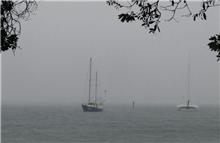
Because the native bush and most native trees are evergreen, but not of the coniferous type, the countryside never looks bare. Only occasionally do you come across imported deciduous trees that turn an autumn colour and lose their leaves. Even Maples manage to hang onto their leaves in some areas, for some reason. Added to the native trees that manage to stay green, there are huge swathes of pine forests, pine being a crop here that matures in just 30 years. So, in the middle of winter, apart from it being colder, the countryside and forests areas still look very green. Only the morning mists and the cooling temperatures to remind you that winter is on the way.

Thursday, April 14, 2011
L is for Letters


Who writes them anymore? Going to your computer to see who's emailed you is not the same as nipping out in your dressing gown to find out who's written to you. Opening letters with a morning cup of tea is/was the most comforting of rituals. I used to answer mine straight away.
I was a compulsive letter writer. After the death of my mother (who kept 27 years worth of my letters in pillow cases) I didn't know what to do with this time and the thoughts that were in my head that needed conveying to someone.
A daily journal didn't work for me. And writing to people who don't reply is soul destroying. Emails are a bit trite and Facebook too frivolous. (I've been reprimanded for writing emails too long. 'I don't read long emails' one recipient informed me.)
A handwritten letter contains much more than the message the words convey. The handwriting itself conveys information about the writer: mood, character, health, and even wealth. There's nothing nicer than reading something on luxury paper, written with an expensive pen and real ink. The choice of coloured inks and the thickness of pen nibs gave more information about the writer. (I went through a phase of using only green ink.) But often, the most telling of letters are those written on whatever was to hand at the time the urge to communicate took you. I have one written on a paper bag.
Important documents were always handwritten. Birth, death and marriage certificates, wills and job applications. 'Please apply in writing', a job advertisement would say. If you typed it they'd assume your handwriting was illegible. You must be a messy person. They'd definitely attempt to read your character from your style.
Handwriting a letter means you have to think clearly and boldly go where your thoughts take you, because there's no delete button. To have something in writing gave it official status.
And what about the stamps? My interest in travel and geography came about from collecting stamps and having pen-friends all around the world. I guess the equivalent is social networking via computer, but those miniature works of art that you lick and stick are missing.
The franking machine that denotes the time and place a letter was posted had to be across the stamp for me to be satisfied. My imagination worked overtime and pictured the writer walking to a post box to post this object directly to me... not filtered through wires and networks and megabytes. A hand to hand procedure, like a relay race. Personal.
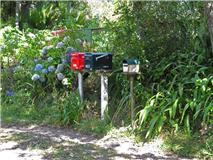
Every now and then I receive a card with a handwritten message inside. Precious.
But very, very rarely do I ever receive a handwritten letter. I wonder if people bother to read mine, or whether, because they're not written in short sound bytes, they're just skimmed and binned. How are historians of the future to find their primary sources?

For anyone who enjoys a good quality piece of paper and a real pen, here is a website you might find interesting. http://www.apenchantforpaper.blogspot.com/
And if you just long to read a handwritten letter, look up http://www.lettersofnote.com/
for letters from famous and infamous characters. Poignant and illuminating.
Tuesday, April 12, 2011
K is for Kina

Fig.1
Yummy mummies! Sea urchins come as males or females and have an annual reproductive cycle. They spawn once a year in spring or summer. Ripe females can be 30% gonads (lovely word) by weight and release over a million eggs. The eggs are fertilized in the water by sperm released from an adjacent male. Eggs hatch into a larval stage in the flowing water and after 4 to 6 weeks they sink to the sandy bottom of the sea bed and metamorphose into tiny sea urchins.
Given the chance, sea urchins are probably long-lived, taking 7 years to reach 40 to 50mm diameter and they can reach up to 190mm. Mainly herbivorous, they feed on attached and drifting algae. They are found at depths of 60 to 80m in most situations except estuaries and sand bars. Their grazing habits help to keep the natural kelp healthy and under control.
Maori people still harvest kina (although there is a daily quota regulation in place as there is for all fish and shellfish in NZ) by diving around offshore rocks with a heavily gloved hands, a knife and a shoulder bag. Some say a screwdriver, tied to the wrist with a piece of string, is preferable to diving with a knife in the waistband of your shorts. That makes sense.

Fig2

But what does it taste like? I'm told that the kina is mainly liquid. That the Maori people just drink it from the outer casing. It's said to taste a bit like a very fishy milkshake with overtones of iodine... but hey, this is not a paid assignment... and gonads or no gonads I'm not going to test it out! I'd rather leave it where it is, doing its bit to clean up the ocean bed. I thought there must be more to it than just a mushy drink and sure enough, further investigation came up with more precise information.
Harvest moon? Kina is best harvested in October, November, December, January & February at low tide on the 1st, 2nd & 3rd days after a full moon.
And now for a recipe... oh yes.
To prepare freshly harvested kina, crack open the shell by piercing the centre or navel of the kina with a butcher's knife. Press the knife down firmly and lever left to right. The shell is brittle and will break into two. Inside you will find a cone-shaped mass of fine teeth-like shell, a colourless salty fluid, 5 tongues, a purple membrane and a quantity of what looks like grit. (Nice, huh!)
Use a teaspoon to scoop out the tongues being careful not to include the membrane or grit. Place the tongues in a jar and discard the rest. (Whew!) The tongues can be eaten raw on bread and are often served with kumara (sweet potato) or pumpkin.
Should you prefer your kina cooked (and who wouldn't?) you can BBQ it or put it into a pie. Simple as that. Alternate layers of kina tongue with slices of bacon in a pastry pie case. Bake for 30 min at 350 degrees. Me, I think I'll stick to the artistic inspiration kina gives and forego the snack.


So the next time you accidentally step on a sea urchin, once you've recovered from the shock, give some thought to its complicated life cycle and the intricacy of its design.

Footnote: the locals say that if you step on an urchin and end up with spines protruding from your skin, the best we to deal with them is to take your flip flop or flipper and bash them really hard so that they break up. The minute particles left inside you will easily pass through your blood stream. This worked for a friend, but please don't take it as best medical advice!
(Ref & acknowledgement for Figs 1 & 2. http://www.mahingakai.org.nz/mahinga-kai-species/kina)
Subscribe to:
Posts (Atom)